
Great Danes • Breed-specific decisions

Choosing pet insurance for a Great Dane

A useful comparison distinguishes treatment of an eligible illness from a planned procedure intended to reduce a future risk.

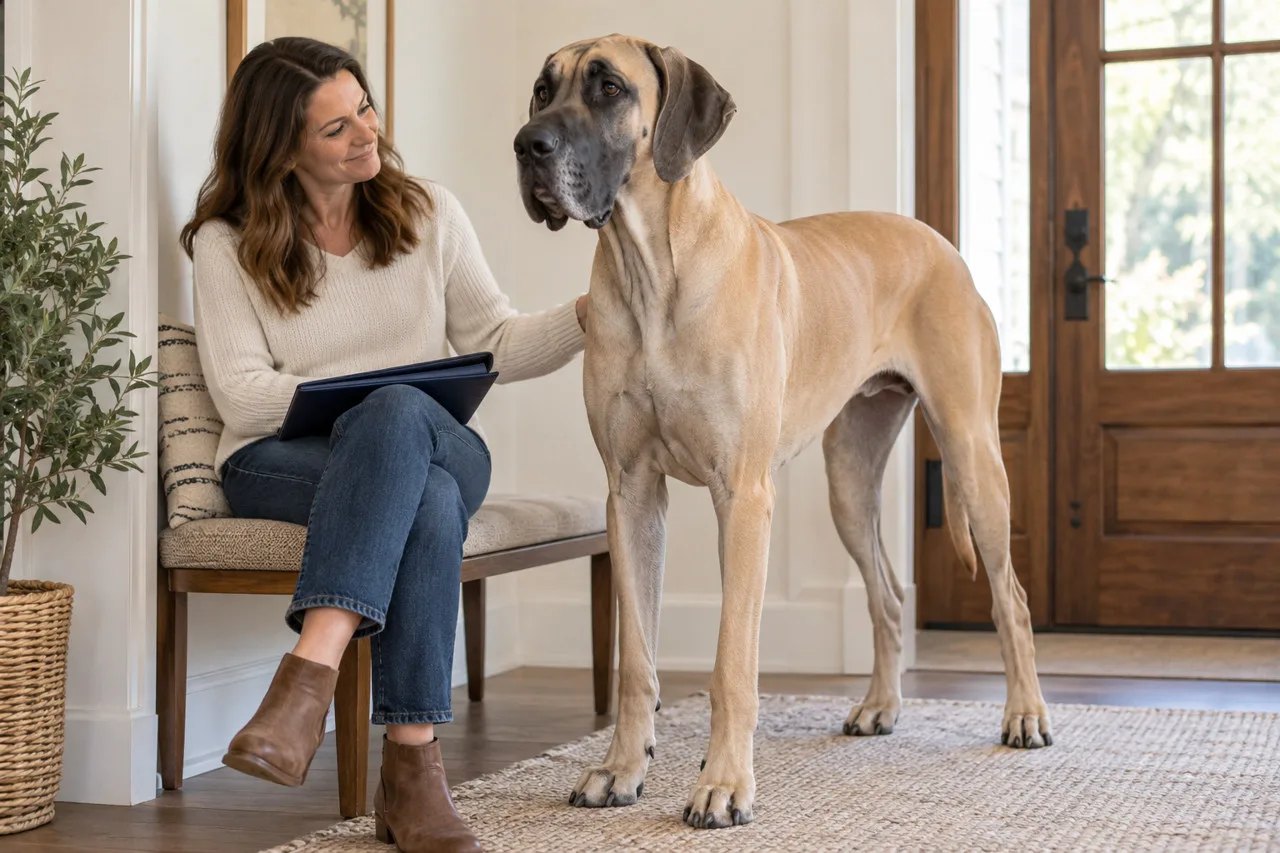
Illustrative fawn Great Dane standing beside its seated owner at home
✓ Policy-first ✓ Independent ✓ Useful checks
Direct answer
The best fit for a Great Dane is an eligible policy whose emergency, hereditary and orthopedic terms match the risks you want to transfer and whose retained costs you can manage. Give special attention to the difference between treatment for gastric dilatation-volvulus and a planned preventive gastropexy. A policy that can cover an emergency operation does not necessarily pay for prevention.
Compare

Set the comparison criteria before naming a favorite

Great Dane question What a useful answer identifies
Emergency GDV treatment Eligibility, surgery/hospitalization scope and remaining benefit capacity.
Planned gastropexy Whether preventive/elective-procedure wording applies and which charges remain excluded.
Hereditary and orthopedic conditions Definitions, prior signs, any bilateral restriction and timing rules.
Specialist follow-up or recovery services Examination and rehabilitation selections, limitations and exclusions.
Practical payment Hospital deposit expectations and how the claim process works for that practice.

A breed risk does not prove this dog has a condition. Use the actual medical record rather than inferring a diagnosis from size or pedigree. Likewise, screening performed by a breeder is not a promise that an insurer will pay for every later problem.

What to know

The best choice changes with the Dane’s insurance position

Starting situation Decision to make first
A puppy with no existing policy Which eligible medical contract can you maintain, and which desired benefits must be selected now?
An adult already insured, with planned preventive care Can you preserve useful medical protection while funding prevention separately or through an available option?
A Dane with current symptoms or a known condition What existing policy, if any, applies, and what future risks would a new contract still protect?

These are decision branches, not predictions about a dog’s health. A young animal can already have relevant history, while an adult’s records may present a different set of questions. Use the actual records and enrollment terms rather than choosing from age alone.

For the already-insured dog, keep the renewal offer in the comparison. The best decision may be to retain suitable medical protection and pay for a planned procedure separately. A newly advertised preventive allowance is not automatically worth a change in the treatment of an established medical history.

What to know

Two concrete routes to investigate for planned gastropexy

That is a more specific lead than its general emergency-surgery promise. Ask whether your offered version includes the procedure and what allowance, timing and other limits apply; do not substitute the name of a different preventive package.

Embrace lists gastropexy among services that may be reimbursed through Wellness Rewards. It describes that product as an optional noninsurance membership with an annual maximum, purchased alongside a pet-insurance policy, and unavailable in Rhode Island. Its terms warn that ending membership early may leave outstanding fees. Confirm the actual offer before counting on a benefit.

Evaluate the underlying medical policy independently. A useful shortlist can favor one medical contract while treating the planned procedure as a separate expense.

Coverage

Do not let one preventive benefit decide the whole insurer

Consider a fictional adult Great Dane with an existing policy and documented joint treatment. The owner is attracted to a different company because an optional package lists gastropexy. Before comparing that allowance, the replacement insurer must explain how it would treat the joint history. A small planned-care benefit does not establish equivalent protection for later joint-related expenses.

If that answer leaves a material exclusion, compare keeping the existing policy plus separately funded prevention with the complete replacement. Do not assign the preventive allowance full value while assigning the uncertain future exclusion no consequence. This is a decision test, not a claim that either named company would exclude this fictional dog.

For a first-time buyer without that continuity issue, the test changes: compare eligible medical terms and the total price of the actual selected options. Reject a package whose desired benefit cannot be purchased in the dog’s state or at its current enrollment stage. Keep an unresolved answer unresolved.

Quotes

Keep the medical reason and the financial reason separate

ACVS identifies Great Danes among giant breeds for which a veterinarian may recommend prophylactic gastropexy. That preventive use differs from gastropexy performed during treatment of a GDV emergency. A listed emergency-surgery benefit therefore cannot answer the preventive-benefit question.

Gastropexy does not prevent all stomach expansion. Follow the veterinarian’s advice about the individual dog’s risks and urgent signs; suspected GDV needs prompt veterinary attention. This guide does not decide whether or when a particular Dane should have surgery.

Once the medical recommendation is clear, compare the available preventive allowance with its full additional payment commitment. Embrace’s membership terms warn that ending early can leave fees due. For any option, ask what remains available after other services use its allowance. Do not change care timing or buy an unsuitable medical policy merely to obtain a routine-care payment.

What to know

Write down why the chosen arrangement wins

  • The medical policy is eligible for this Great Dane and the important prior-history questions are answered.
  • Emergency, hereditary and orthopedic terms satisfy the needs you identified.
  • You can sustain the premium and fund the retained share and clinic deposit.
  • Any preventive option is actually available, has usable remaining benefits and has an understood payment commitment.
  • If replacing coverage, the advantages justify the documented protection you would lose.

The result may be a new medical policy with prevention, a medical-only offer with separately funded planned care, or retention of an existing policy. Those are meaningful alternatives. No single company wins all three situations simply because it mentions Great Danes or gastropexy.

Save both the reason for choosing and the largest remaining limitation. Revisit that comparison when an actual renewal or care recommendation changes it, instead of rebuilding a breed ranking from advertising each time.

Evidence

Sources and policy context

These public references support the consumer or veterinary context. Named insurer details were checked in official product materials; the policy offered for your pet and state determines the actual terms.

Next step

Compare Current Pet Insurance Rates

Check current options for your pet and location, then compare the policy details, exclusions, costs, and eligibility before choosing.

Compare the policy before you choose Check the actual offer, exclusions and out-of-pocket terms.
See Rate Options